The TP-Link BE10000 review comes down to a simple question: do you need a mesh system with substantial wireless capacity and several multi-gig Ethernet ports?
The two-unit Deco BE63 is aimed at larger homes and busy networks, with a tri-band Wi-Fi 7 design, wired backhaul support, VPN features, and HomeShield controls.
Deco BE63 Review Summary
The quick verdict
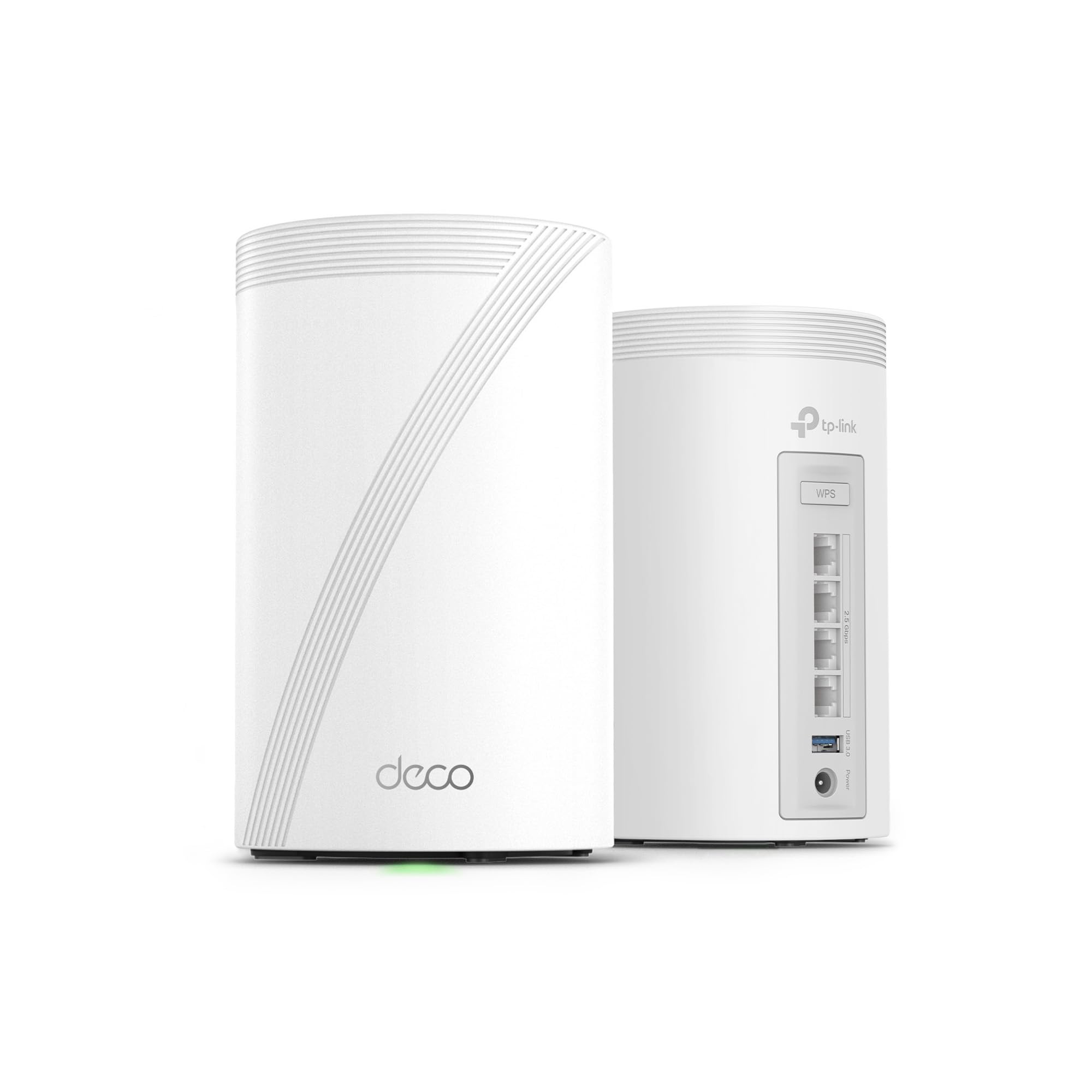
600+ ratings
Read Amazon ReviewsTP-Link Deco BE63
A two-unit Wi-Fi 7 mesh system for larger homes, multi-gig wired setups, and households with many connected devices.
- Two-unit tri-band Wi-Fi 7 mesh system with a combined BE10000 class designation.
- Maximum band rates listed as up to 5,188 Mbps on 6 GHz, 4,324 Mbps on 5 GHz, and 574 Mbps on 2.4 GHz.
- Coverage listed up to 5,800 square feet and support for more than 200 devices.
- Four 2.5G WAN/LAN ports and one USB 3.0 port.

Pros
- Tri-band Wi-Fi 7 design offers substantial headline capacity across three frequency bands.
- Four 2.5G ports make it practical to connect multiple multi-gig wired devices or network equipment.
Consider before buying
- The system’s headline wireless rates are maximums, not a promise of the speed an individual device will receive.
- To use the 6 GHz band or Wi-Fi 7 features, devices need compatible hardware; older clients will not use those newer capabilities.
Read the full review summary
The Deco BE63 combines three Wi-Fi bands with a two-unit mesh setup and four 2.5G WAN/LAN ports per system description.
Its listed maximum wireless rates are up to 5,188 Mbps on 6 GHz, 4,324 Mbps on 5 GHz, and 574 Mbps on 2.4 GHz.
Those figures describe the bands’ headline capacity; actual connection speeds depend on conditions, distance, and obstacles.
It is a stronger fit for a larger home with newer Wi-Fi devices, a multi-gig internet plan or wired equipment, and a reason to connect mesh nodes by Ethernet.
The Deco app, VPN client and server support, HomeShield tools, and compatibility with other Deco products add flexibility. Buyers should still check their modem, device capabilities, and intended node placement before choosing.
The buying factors
Deco BE63 Scorecard
Editorial scores reflect listed features and buyer fit; they are not laboratory measurements or customer ratings.
Wireless capacity
Tri-band Wi-Fi 7 and high listed maximum rates give it room for demanding, compatible devices.
Wired connectivity
Four 2.5G WAN/LAN ports and a USB 3.0 port offer useful connection options.
Mesh flexibility
The two-unit system supports wireless and wired backhaul, and can integrate with other Deco products.
Large-home fit
The stated coverage reaches up to 5,800 square feet, though layout and obstacles affect real coverage.
Network management
Setup and management run through the Deco app, with HomeShield and roaming features included.
Everyday compatibility
Backward compatibility across Wi-Fi generations helps accommodate older devices alongside newer ones.
Key Features and Specifications of Deco BE63
- Two-unit tri-band Wi-Fi 7 mesh system with a combined BE10000 class designation.
- Maximum band rates listed as up to 5,188 Mbps on 6 GHz, 4,324 Mbps on 5 GHz, and 574 Mbps on 2.4 GHz.
- Coverage listed up to 5,800 square feet and support for more than 200 devices.
- Four 2.5G WAN/LAN ports and one USB 3.0 port.
- Supports simultaneous wired and wireless backhaul; backhaul requires at least two Deco units.
- Includes VPN client and server support, HomeShield network protection and parental controls, and AI-driven roaming.
- Managed with the Deco app; compatible with other Deco products and earlier Wi-Fi generations. A separate modem is required.
Pros and Cons of Deco BE63
Pros
- Tri-band Wi-Fi 7 design offers substantial headline capacity across three frequency bands.
- Four 2.5G ports make it practical to connect multiple multi-gig wired devices or network equipment.
- Wired backhaul provides an option for linking mesh units over Ethernet.
- VPN support and HomeShield features extend its usefulness beyond basic wireless coverage.
Consider before buying
- The system’s headline wireless rates are maximums, not a promise of the speed an individual device will receive.
- To use the 6 GHz band or Wi-Fi 7 features, devices need compatible hardware; older clients will not use those newer capabilities.
- The two-unit system’s coverage depends on the home’s layout, construction, and node placement.
Who Should Buy Deco BE63?
Good fit
Consider the Deco BE63 if you want to replace a single router with a mesh system while retaining substantial wired capacity.
The four 2.5G ports are especially relevant if you have multi-gig equipment or plan to connect several devices by Ethernet, and the simultaneous wired and wireless backhaul approach gives you placement options.
For wired backhaul, plan on using at least two Deco units.
It also makes sense for homes with a mix of older and newer devices: backward compatibility supports older Wi-Fi generations, while compatible Wi-Fi 7 clients can use the newer network capabilities.
Before buying, check whether your modem and internet plan can take advantage of multi-gig connections, and whether your household has devices that can use the 6 GHz band.
The app-based setup and management, HomeShield controls, and VPN client and server support are useful if you want network features managed in one system.
Review which HomeShield functions suit your needs and confirm the Deco app’s setup requirements before committing.
Who should skip it
Skip it if your main need is an inexpensive way to improve coverage and you have no use for Wi-Fi 7, 6 GHz, or multi-gig wired connections.
The BE63’s more capable design may be unnecessary for a small home or a network of modest demands.
Look elsewhere if you need measured, guaranteed coverage or speeds for a particular floor plan. The stated coverage and band rates are maximums, and walls, distance, and device support affect results.
How the Deco BE63 fits a high-capacity home network
Tri-band Wi-Fi 7 and device readiness
The BE63’s three bands provide separate capacity on 6 GHz, 5 GHz, and 2.4 GHz, with listed maximum rates adding up to its BE10000 class. That does not mean one device will reach the combined figure.
The newer bands are most relevant when client devices support them, while backward compatibility gives older equipment a path to connect.
Ethernet options and node links
Four 2.5G WAN/LAN ports make wired expansion a meaningful part of this system’s appeal. They can serve multi-gig network connections, and the system supports wired backhaul alongside wireless backhaul.
If you want to use Ethernet between mesh units, account for the requirement of at least two Deco units and the cabling needed to reach their locations.
Coverage and placement
The two-unit system is listed for coverage up to 5,800 square feet and more than 200 devices.
These figures make it a candidate for a larger or device-heavy household, but they cannot determine how well a particular layout will be served.
Consider where the modem sits, where people need reliable connectivity, and how walls or other obstacles may affect signal paths.
Management, security, and compatibility
The Deco app handles setup and management, while HomeShield adds network protection, parental controls, and IoT security features. VPN client and server support can route home devices through remote VPN connections without installing VPN software on each one.
The ability to combine Deco products may help when building out coverage, but check the specific model compatibility and feature needs for your intended setup.
Alternatives to Deco BE63
Whole Home & Mesh Wi-Fi Systems alternative
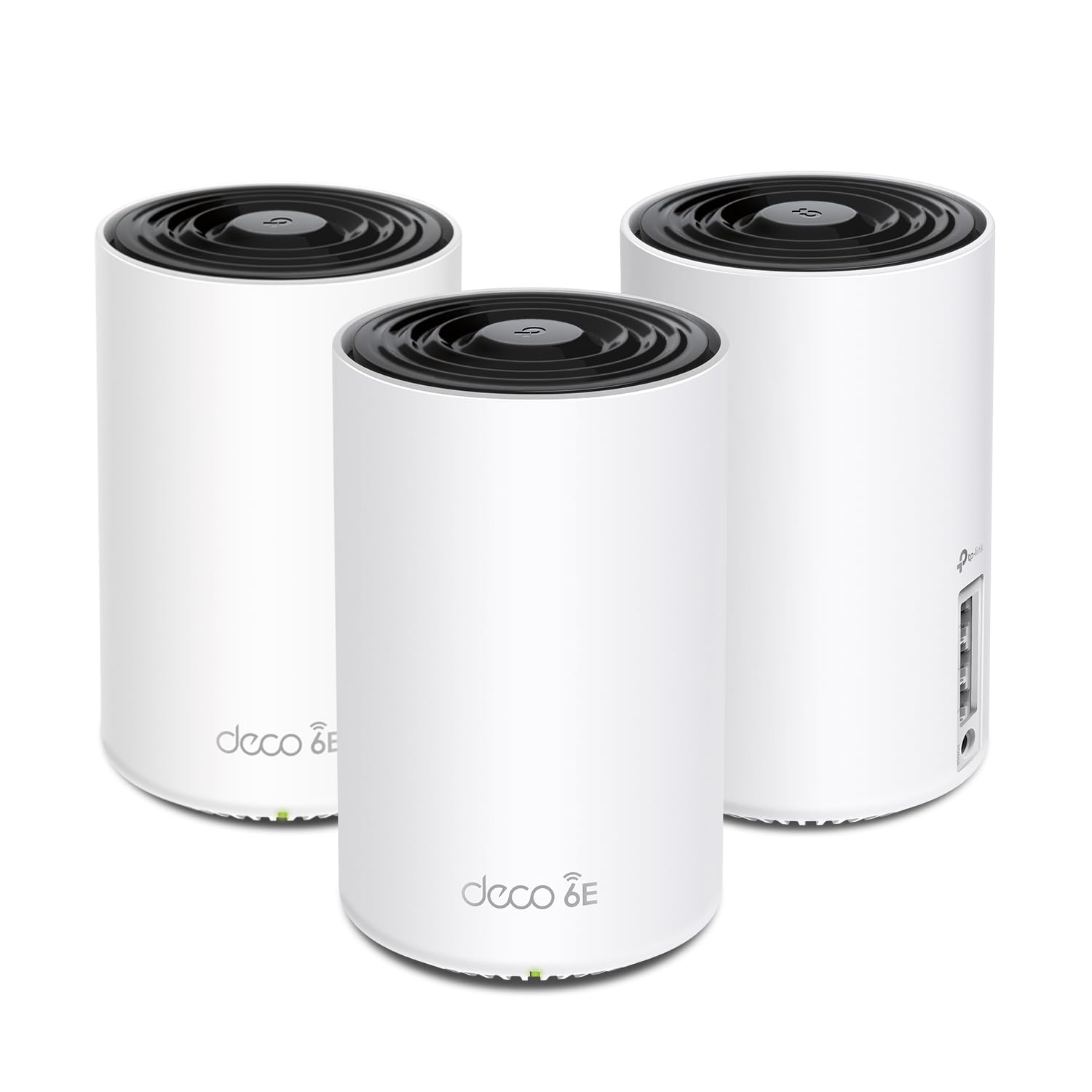
2,000+ ratings
Read Amazon ReviewsTP-Link Deco XE75
Choose the BE63 if Wi-Fi 7 and four 2.5G ports matter more to your network. Consider the XE75 if you want three units and its stated larger coverage area, and Wi-Fi 6E is sufficient for your devices.
- The Deco XE75 is a three-unit Wi-Fi 6E tri-band system with listed coverage up to 7,200 square feet and total speeds up to 5,400 Mbps.
- Its 6 GHz band can serve compatible devices or operate as backhaul.
- The Deco BE63 offers Wi-Fi 7 tri-band capacity, four 2.5G WAN/LAN ports, and stated coverage up to 5,800 square feet in a two-unit setup.
Whole Home & Mesh Wi-Fi Systems alternative
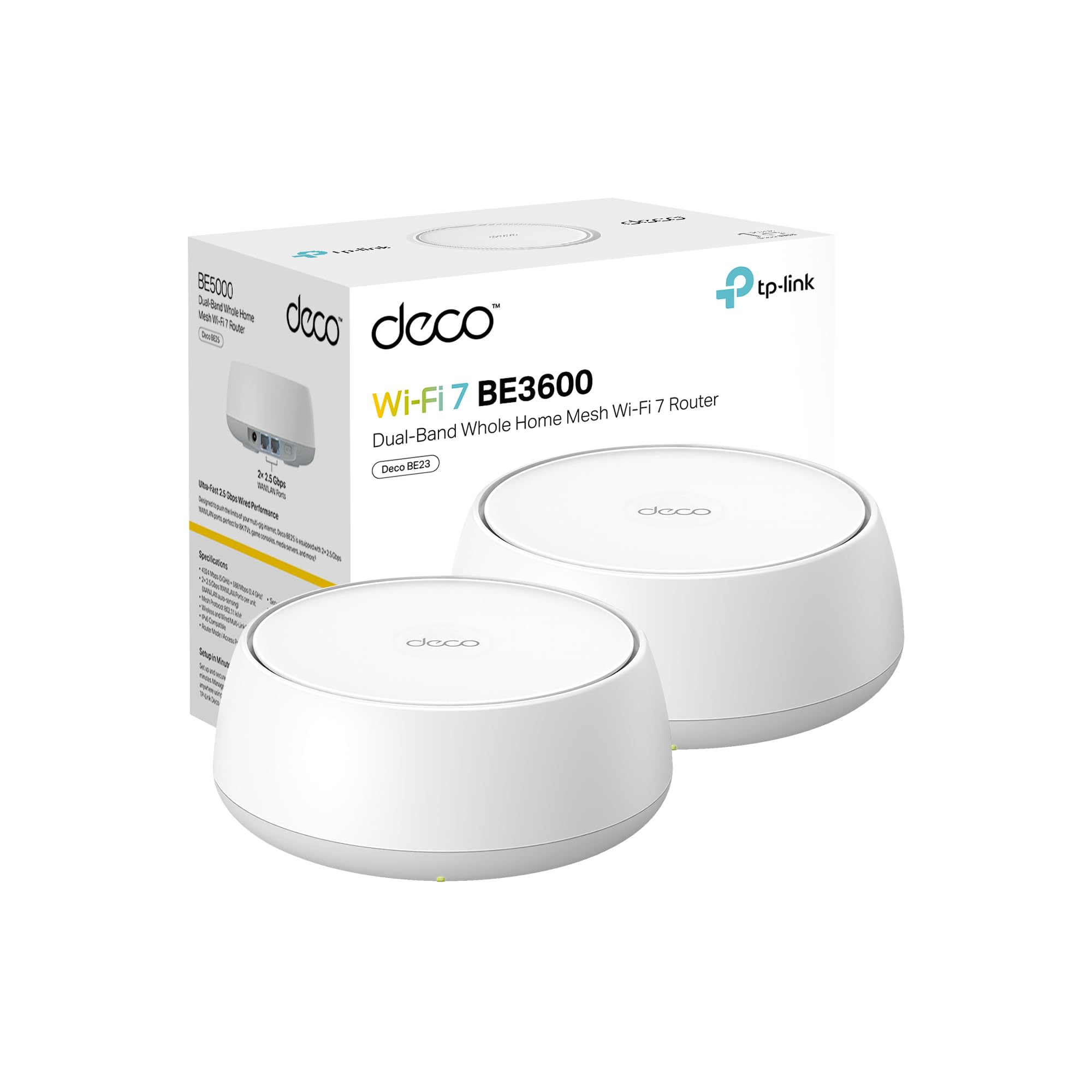
800+ ratings
Read Amazon ReviewsTP-Link Deco BE23
The BE23 may suit a smaller coverage area or a setup that needs fewer ports while retaining Wi-Fi 7.
The BE63 is the more suitable choice when you want tri-band capacity, more 2.5G ports, or the larger stated coverage figure.
- The Deco BE23 is a two-unit dual-band Wi-Fi 7 system with up to 4,500 square feet of stated coverage, two 2.5G WAN/LAN ports per unit, and listed maximum rates of 2,882 Mbps on 5 GHz and 688 Mbps on 2.4 GHz.
- The Deco BE63 has three Wi-Fi bands, four 2.5G WAN/LAN ports, and listed coverage up to 5,800 square feet for two units.
Is Deco BE63 Worth It?
The TP-Link Deco BE63 is worth considering if your home can use its tri-band Wi-Fi 7 design, multi-gig Ethernet ports, and two-unit mesh coverage.
Its mix of wired and wireless backhaul, app management, VPN support, and HomeShield controls gives it appeal beyond basic whole-home Wi-Fi.
Buy it for the capabilities your household can use, not for the headline rates alone.
Confirm your modem, client devices, Ethernet plans, and floor layout align with the system’s strengths; if your network needs are simpler, a less capable mesh system may be a better fit.
Your review at a glance
600+ ratings
Read Amazon ReviewsTP-Link Deco BE63
A two-unit Wi-Fi 7 mesh system for larger homes, multi-gig wired setups, and households with many connected devices.
- Two-unit tri-band Wi-Fi 7 mesh system with a combined BE10000 class designation.
- Maximum band rates listed as up to 5,188 Mbps on 6 GHz, 4,324 Mbps on 5 GHz, and 574 Mbps on 2.4 GHz.
- Coverage listed up to 5,800 square feet and support for more than 200 devices.
- Four 2.5G WAN/LAN ports and one USB 3.0 port.